Akkermansia and Leaky Gut — How It Protects Your Gut Lining
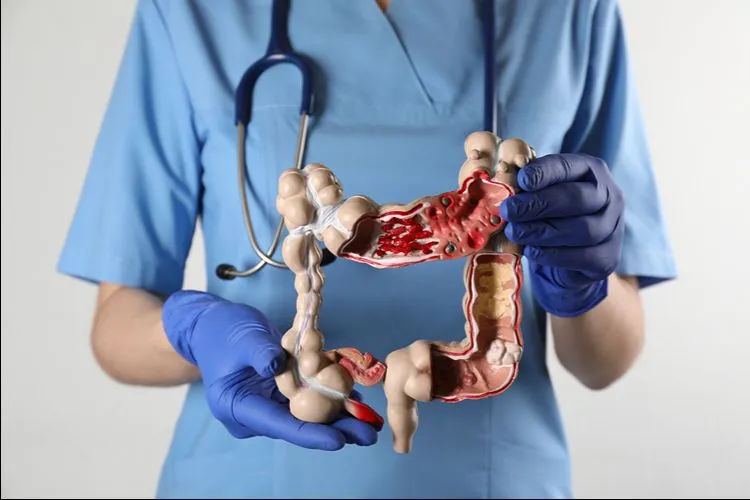
Leaky gut — or intestinal permeability — is not a fringe concept. It is a measurable physiological state that is increasingly recognised in mainstream medicine as a contributing factor in conditions ranging from IBS and IBD to metabolic syndrome and autoimmune disease. Akkermansia muciniphila is one of the few bacteria with a direct, well-documented mechanism for maintaining the gut barrier and reducing intestinal permeability. This article explains how that mechanism works and what the evidence shows.
Intestinal permeability is a well-established physiological concept supported by extensive published research. The term "leaky gut" is informal but refers to the same phenomenon — a measurable increase in the passage of molecules through the gut lining. It is distinct from some broader alternative medicine claims made under the same label. The research cited in this article uses the scientifically accepted term "intestinal permeability."
What Is the Gut Barrier?
The gut barrier is not a single structure but a multi-layered system that separates the content of the intestinal lumen from the bloodstream and the rest of the body. Its components include:
- The outer mucus layer — a loose, continuously shed layer populated by gut bacteria and acting as a first line of bacterial interaction
- The inner mucus layer — a thicker, denser layer that is largely bacteria-free and directly coats the epithelial surface; this is where Akkermansia lives
- The epithelial layer — a single layer of cells (colonocytes) that physically separates the gut lumen from underlying tissue
- Tight junction complexes — protein complexes (including claudins, occludin and ZO-1) that seal the gaps between adjacent epithelial cells
- The mucosal immune system — the network of immune cells in the lamina propria beneath the epithelium that monitors and responds to what crosses the barrier
A healthy gut barrier prevents bacteria, bacterial products (particularly LPS), undigested food particles, and environmental toxins from crossing into the bloodstream. When barrier integrity is compromised, these substances pass through — triggering immune responses that drive systemic inflammation.
What Causes Leaky Gut?
Intestinal permeability increases when tight junction proteins are disrupted, the mucus layer thins, or epithelial cells are damaged. Common causes include:
| Cause | Mechanism |
|---|---|
| Antibiotic use | Disrupts microbiome including Akkermansia; reduces short-chain fatty acids that support epithelial health |
| Ultra-processed foods / emulsifiers | Carboxymethylcellulose and polysorbate-80 directly degrade the mucus layer |
| Alcohol | Directly disrupts tight junction proteins and increases acetaldehyde, which damages epithelial cells |
| Chronic stress | Cortisol and stress hormones increase intestinal permeability via gut-brain axis signalling |
| NSAIDs (e.g. ibuprofen) | Inhibit prostaglandin synthesis that supports mucosal protection |
| Low-fibre diet | Reduces mucin production and short-chain fatty acids; depletes Akkermansia |
| Obesity | Associated with lower Akkermansia and thinner mucus layer; increases LPS-driven inflammation that further damages barrier |
| IBD | Active inflammation directly disrupts epithelial integrity; Akkermansia is consistently depleted in active IBD |
How Akkermansia Repairs the Gut Barrier
Akkermansia muciniphila addresses gut barrier compromise through four distinct mechanisms, each operating at a different level of the barrier system.
1. Mucus Layer Maintenance
By feeding on mucin glycoproteins in the inner mucus layer, Akkermansia continuously signals goblet cells to produce fresh mucin. This maintains the thickness and integrity of the inner mucus layer — the critical bacteria-free zone that physically separates gut bacteria from the epithelial surface. Without adequate Akkermansia, this renewal signal is reduced and the mucus layer thins progressively.
2. Tight Junction Reinforcement via Amuc_1100
Akkermansia's outer membrane protein Amuc_1100 binds to Toll-Like Receptor 2 (TLR2) on epithelial cells. This interaction upregulates the expression of claudin-3 — a key component of the tight junction complex that seals gaps between epithelial cells. The Plovier 2017 study demonstrated this mechanism in detail, showing that Amuc_1100 alone was sufficient to improve gut barrier function in mouse models.
3. Short-Chain Fatty Acid Production
Akkermansia ferments mucin-derived sugars to produce acetate and propionate — short-chain fatty acids that serve as energy substrates for colonocytes (the epithelial cells lining the colon). Well-nourished colonocytes maintain higher expression of tight junction proteins and have greater resistance to barrier disruption. Propionate also has direct anti-inflammatory effects in the colonic epithelium.
4. Reduction of LPS-Driven Barrier Damage
By reducing circulating LPS through improved barrier function, Akkermansia creates a positive feedback loop. Lower circulating LPS means less TLR4-mediated inflammatory signalling at the epithelial surface — which means less inflammation-induced tight junction disruption. The initial barrier improvement leads to reduced LPS, which leads to further barrier improvement.
Akkermansia and IBS
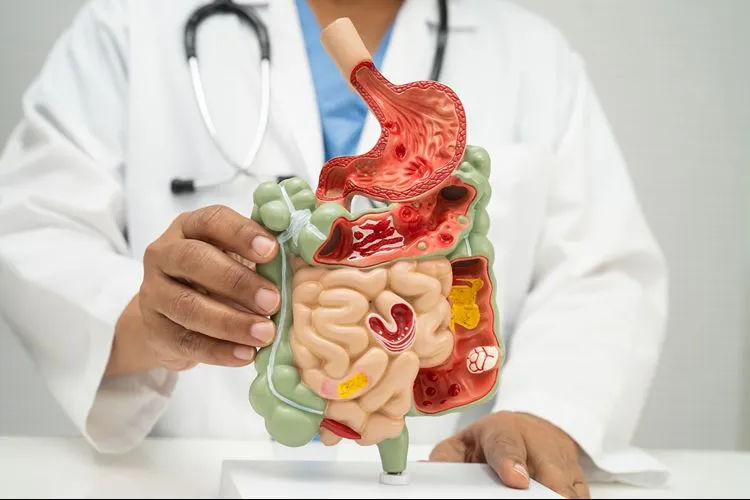
The connection between Akkermansia and IBS is primarily through gut barrier function. In IBS — particularly IBS-D (diarrhoea-predominant IBS) — intestinal permeability is measurably increased. Tight junction protein expression is reduced, particularly ZO-1 and occludin. LPS-driven immune activation in the gut wall contributes to the visceral hypersensitivity and altered gut motility that characterise IBS symptoms.
Multiple observational studies have found that people with IBS have significantly lower Akkermansia levels than healthy controls. Whether this depletion is a cause or consequence of IBS — or both — is not fully established. But the mechanistic pathway through which low Akkermansia could worsen IBS is well defined: thinner mucus → compromised tight junctions → increased LPS translocation → gut wall immune activation → visceral hypersensitivity and motility disruption.
No large RCT has specifically tested Akkermansia supplementation in IBS patients, so direct clinical guidance is still limited. However, the mechanistic link is strong enough that supporting Akkermansia through dietary changes (pomegranate, prebiotic fibres, avoiding emulsifiers) is a reasonable, evidence-informed strategy for people with IBS who want to address gut barrier function. For detailed information on IBS specifically, see our sister site ibs.ie.
Measuring Intestinal Permeability
Intestinal permeability can be measured through several methods used in research and increasingly in clinical practice:
- Lactulose/mannitol ratio test — oral ingestion of two non-metabolised sugars; increased lactulose passage relative to mannitol in urine indicates increased permeability
- Serum LPS and LPS-binding protein (LBP) — elevated circulating LPS indicates increased bacterial translocation across the gut barrier
- Serum zonulin — a protein that modulates tight junction permeability; elevated levels are associated with increased intestinal permeability (though the zonulin test has methodological limitations that should be noted)
- Intestinal fatty acid binding protein (I-FABP) — released by damaged enterocytes; elevated serum I-FABP indicates epithelial injury
- Gut microbiome testing — commercially available microbiome tests (Viome, Atlas Biomed, Thryve) include Akkermansia quantification, which serves as an indirect indicator of mucus layer health
Practical Steps to Support Akkermansia and Gut Barrier Health
Supporting Akkermansia through diet and lifestyle is the most accessible way to improve gut barrier function. The key evidence-based strategies are:
- Eat polyphenol-rich foods daily — pomegranate, cranberry, blueberry, green tea and dark chocolate all increase Akkermansia and have additional direct benefits for gut barrier integrity
- Include prebiotic fibres — inulin, FOS and resistant starch feed the gut lining and support mucin production; found in chicory, garlic, onion, oats and cooked-and-cooled potatoes
- Avoid emulsifiers in processed foods — carboxymethylcellulose and polysorbate-80 directly degrade the mucus layer
- Use antibiotics only when necessary — and support recovery with dietary changes afterwards
- Consider an Akkermansia supplement — pasteurised Akkermansia has direct evidence for reducing LPS and improving barrier function
- Manage stress — chronic psychological stress measurably increases intestinal permeability through cortisol and CRH signalling
Frequently Asked Questions
Akkermansia muciniphila has well-documented mechanisms for improving gut barrier integrity — reinforcing the mucus layer, strengthening tight junctions via Amuc_1100/TLR2, and reducing circulating LPS. Clinical trial evidence shows it measurably reduces metabolic endotoxaemia in humans. Whether it "cures" leaky gut depends on the underlying cause — Akkermansia addresses the gut-microbiome-related component but cannot resolve structural disease or conditions like active IBD on its own.
Akkermansia levels are consistently lower in people with IBS than in healthy controls, and the mechanistic link between low Akkermansia, increased gut permeability, and IBS-D symptoms is well established. Supporting Akkermansia through polyphenol-rich foods and prebiotic fibres is a reasonable evidence-informed approach for people with IBS. Direct clinical trial evidence specifically in IBS patients is still limited.
Tight junctions are protein complexes (including claudins, occludin and ZO-1) that seal the gaps between adjacent epithelial cells in the gut lining. When these proteins are disrupted — by inflammation, certain foods, stress, alcohol or bacterial imbalance — the gaps widen and substances that should remain in the gut (including bacterial LPS) can pass into the bloodstream. Akkermansia directly upregulates claudin-3 expression through Amuc_1100/TLR2 signalling, strengthening these junctions.
Foods that support gut barrier repair include: polyphenol-rich foods (pomegranate, cranberry, blueberry, green tea, dark chocolate) that increase Akkermansia; prebiotic fibres (chicory, garlic, onion, leek, oats) that support mucin production; fermented foods (yogurt, kefir) that support overall microbiome health; and omega-3-rich foods (oily fish) with direct anti-inflammatory effects at the gut barrier. Avoiding emulsifiers in ultra-processed foods and excessive alcohol is equally important.
Read Next


Sources & References
Plovier H, et al. (2017). A purified membrane protein from Akkermansia muciniphila or the pasteurized bacterium improves metabolism in obese and diabetic mice. Nature Medicine. View on PubMed ↗
Cani PD, et al. (2008). Changes in gut microbiota control metabolic endotoxemia-induced inflammation in high-fat diet-induced obesity and diabetes in mice. Diabetes. View on PubMed ↗
Everard A, et al. (2013). Cross-talk between Akkermansia muciniphila and intestinal epithelium controls diet-induced obesity. PNAS. View on PubMed ↗
Depommier C, et al. (2019). Supplementation with Akkermansia muciniphila in overweight and obese human volunteers: a proof-of-concept exploratory study. Nature Medicine. View on PubMed ↗
Earley H, et al. (2019). A Preliminary Study Examining the Binding Capacity of Akkermansia muciniphila and Desulfovibrio spp., to Colonic Mucin in Health and Ulcerative Colitis. PLoS ONE. View on PubMed ↗